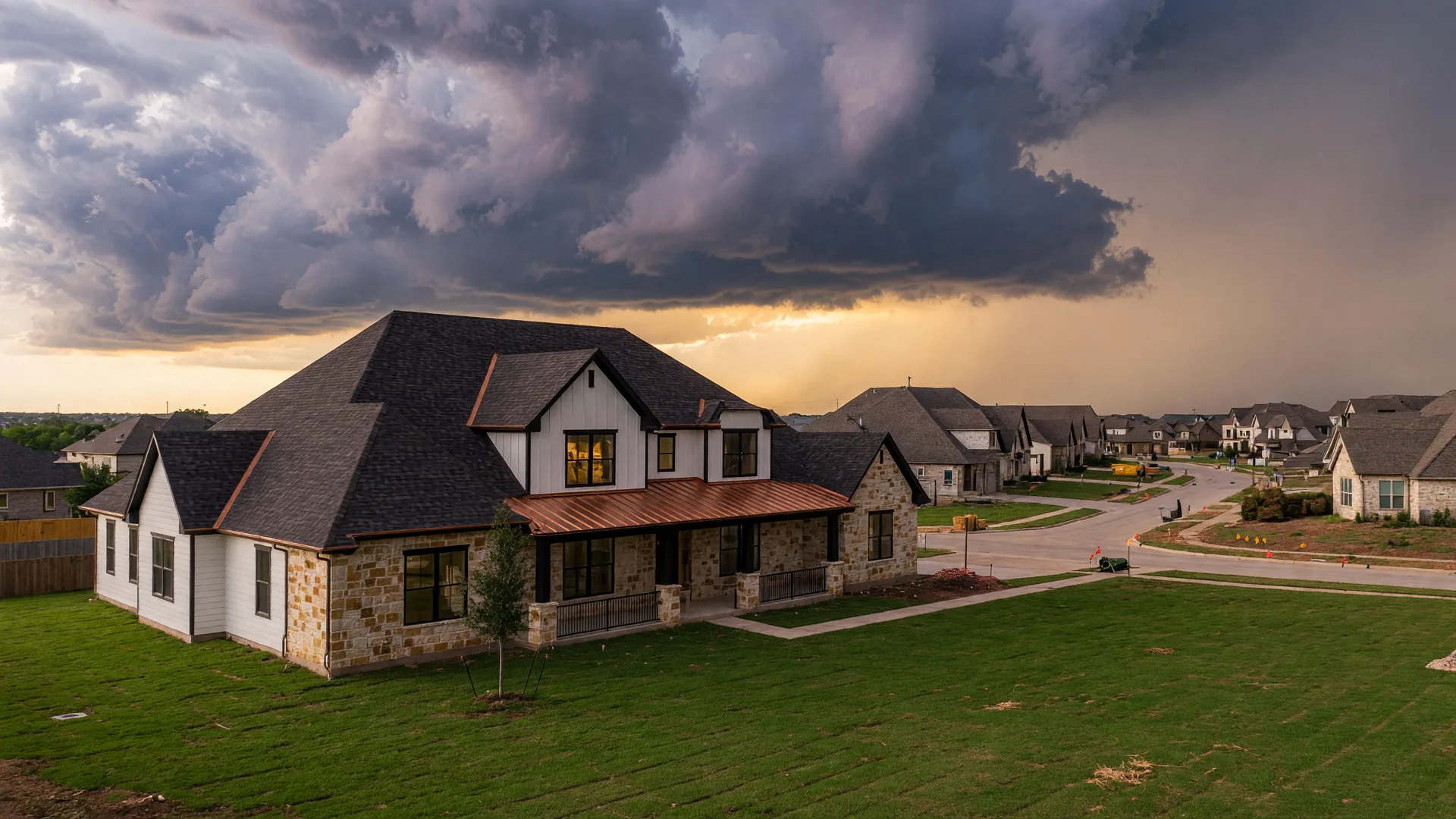
Homeowners insurance is a closing item you arrange yourself, and in North Texas it is more expensive, and more specific, than most relocating buyers expect. Hail is the leading cause of homeowners-insurance loss in Texas, DFW-area wind and hail deductibles commonly run 2 percent of dwelling coverage, and the policy you need must be effective the day you close. I am Theresa De La Rosa, a Texas Real Estate Broker and REALTOR® at Covenant Heritage Realty, and I explain how North Texas insurance works for new-construction buyers, why hail and wind shape it the way they do, and what to verify in writing before your closing date.
Quick Answers
These are the short answers; the sections below show the sources and the verification steps. Premiums and policy terms vary by carrier, community, and property, so treat every figure here as a starting point for your own quotes.
- Do I need homeowners insurance to buy new construction in Texas? Your lender requires it. Texas law does not mandate homeowners insurance, but your mortgage lender will require proof of a policy with coverage at least equal to the loan, effective no later than your closing date. Plan to shop and bind a policy in the weeks before closing.
- Why is homeowners insurance expensive in North Texas? Hail. Hail is the No. 1 cause of homeowners-insurance loss in Texas, the state led the U.S. in major hailstorms for the 11th straight year in 2025, and a Dallas Morning News analysis of NOAA data counted more than 1,800 storms in Dallas, Collin, Denton, and Tarrant counties between 2020 and 2025, about half of them hailstorms.
- What is a wind and hail deductible? In North Texas it is commonly a percentage of your dwelling coverage, often 2 percent, not a flat dollar amount. On a home insured for $400,000 of dwelling coverage, a 2 percent wind and hail deductible means about $8,000 comes out of your pocket before the policy pays for hail or wind damage to the roof.
- Who insures a new home during construction? The builder carries builder's-risk insurance while the home is under construction, and your homeowners policy takes over at closing. Your lender will not fund without proof of your policy in place, so the handoff happens at the closing table, not after you move in.
- Does the builder's warranty cover hail damage? No. A new-home warranty covers construction defects like workmanship and materials, while homeowners insurance covers sudden, accidental losses such as hail, wind, fire, and theft. Hail damage to a roof is an insurance claim, not a warranty claim.
Table of Contents
- Why Homeowners Insurance in North Texas Is Different
- How Much Does Homeowners Insurance Cost in Texas?
- The Wind and Hail Deductible: a Percentage, Not a Flat Fee
- Who Insures a New Home, and When
- Insure the Replacement Cost, Not the Price You Paid
- Builder Warranty vs. Homeowners Insurance
- Checklist for Relocating Buyers
- Frequently Asked Questions
- Conclusion
- How I Can Help
- Primary Sources
Why Homeowners Insurance in North Texas Is Different
North Texas weather is the short answer. Hail is the leading cause of homeowners-insurance loss in Texas, and Texas led the United States in major hailstorms for the 11th consecutive year in 2025, according to United Policyholders. A Dallas Morning News analysis of National Oceanic and Atmospheric Administration data found that Dallas, Collin, Denton, and Tarrant counties recorded more than 1,800 severe storms between 2020 and 2025, roughly half of them hailstorms, with billions of dollars in property damage across the region.
Two events frame the current market. The June 2023 storm outbreak across the DFW area drove an estimated $7 billion to $10 billion in insured losses, and May 2024 hail caused more than $2.3 billion in damage across Texas. Those losses are why carriers have tightened terms since 2022: DFW wind and hail deductibles moved from 1 percent to 2 percent of dwelling coverage between 2022 and 2024, and 2 percent is now the common North Texas standard.
For a relocating buyer, the practical implication is that you should not assume a new roof means a cheap policy. New construction can carry advantages, a new roof at full replacement value being the big one, but the wind and hail exposure is the same North Texas exposure, and the premium and deductible reflect the location, not the age of the shingles.
How Much Does Homeowners Insurance Cost in Texas?
The Texas Department of Insurance reported a preliminary statewide average annual homeowners premium of about $3,489 in 2025, up from roughly $1,961 in 2019, with approved rate changes of about 10.8 percent in 2022, 21.1 percent in 2023, 18.7 percent in 2024, and a smaller increase near 4.3 percent in 2025. The average dwelling coverage on Texas policies more than kept pace with those premium increases, rising from about $252,000 in 2016 to about $408,500 in 2024, because reconstruction costs rose sharply.
Statewide averages only go so far. Your actual premium will be set by the specific address, the replacement cost of the structure, the coverage you choose, the deductible you accept, your claims history, and the carriers willing to write in your ZIP code. Premiums for similar homes vary community to community across Denton County, so the disciplined move is to get multiple quotes before you are under closing pressure. The number that matters is the one written in the policy you actually sign, not a statewide or regional average.
Because the premium is almost always escrowed into your monthly mortgage payment, it becomes part of the monthly carrying cost of the home, alongside principal, interest, taxes, HOA dues, and any special-district assessments. The property taxes and ownership costs guide walks through how those line items combine into a realistic monthly number for a Denton County property.
The Wind and Hail Deductible: a Percentage, Not a Flat Fee
A typical Texas homeowners policy has more than one deductible. Most perils carry a flat-dollar deductible, often $1,000 or $2,500, while wind and hail damage carries a separate deductible that in North Texas is commonly written as a percentage of your dwelling coverage, frequently 2 percent. On a home insured for $400,000 of dwelling coverage, a 2 percent wind and hail deductible leaves about $8,000 of roof damage on your side of the claim before the policy pays. On a smaller policy, say $350,000 of dwelling coverage, 2 percent is about $7,000.
The deductible is part of the policy you can actually negotiate by comparing quotes. Carriers may offer a menu of wind and hail deductible options, and dollar deductibles are sometimes available alongside percentage deductibles, typically at a higher premium. The trade-off is real: a lower wind and hail deductible means a higher premium every year, and a higher one means you self-insure more of the risk that this region reliably delivers.
Ask for the wind and hail deductible in writing before you commit, and read it on the declarations page when the policy is issued. It is the number most likely to cost you thousands after the next North Texas hailstorm, and relocating buyers who have never seen a percentage deductible are the ones most surprised by it at claim time.
Who Insures a New Home, and When
In new construction, there are two insurance layers and they switch at closing. During construction, the builder carries builder's-risk insurance covering the home and the worksite, including materials, vandalism, and partly completed structures. That policy is the builder's, not yours. It does not cover your personal property, and it does not continue once you own the home.
Your homeowners policy, typically an HO-3 form, must be effective on or before the day you close. Mortgage lenders require proof of the policy before they fund, so the practical sequence is: get quotes in the weeks before closing, bind the policy with a start date matching your closing date, send the declarations page to your lender, and walk into the closing with coverage already in place. The switch from the builder's policy to yours happens at that moment, with no gap.
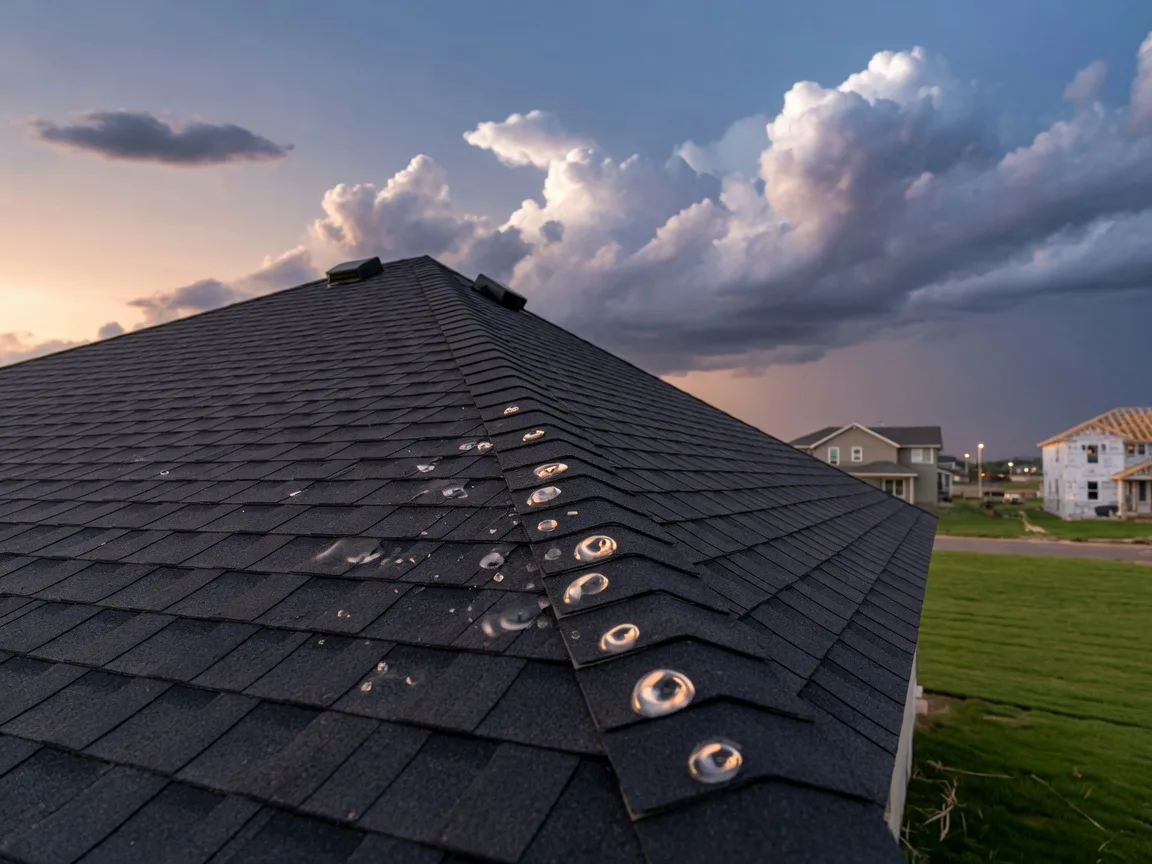
Hail routinely reaches North Texas new construction. The wind and hail deductible on your policy, not the builder's warranty, is what responds after a storm.
One gap that catches relocating buyers: vacancy. If you close on the home but do not move in right away, which is common when you are finishing a school year, waiting on furniture, or completing work before the move, many homeowners policies treat an unoccupied home differently or exclude coverage on homes vacant for extended periods. If there will be a gap between closing and move-in, tell the insurer when you quote so the policy reflects reality, and confirm in writing how unoccupancy is treated.
Insure the Replacement Cost, Not the Price You Paid
The dwelling coverage amount on your policy, Coverage A, should reflect what it would cost to rebuild the home today, not the purchase price and not the taxable value. In North Texas, agents and carriers commonly cite a planning range of about $150 to $200 per square foot for standard construction, but the right number for your specific home depends on its finishes, the builder, and current labor and material costs in the region.
Underinsuring is the expensive mistake. If your dwelling limit is too low, a total loss can leave you short of the money needed to rebuild, and some policies apply a coinsurance or similar clause that reduces the payment on partial losses when the dwelling limit is below a stated percentage of replacement cost. Ask the carrier how the policy handles the gap between the dwelling limit and actual replacement cost, and whether extended or guaranteed replacement cost coverage is available.
New construction has one genuine advantage here: a brand-new roof, newer wiring, plumbing, and mechanicals, and materials that match current standards are more expensive to replace but also less likely to be dinged with depreciation schedules. Watch for roof endorsements that pay actual cash value rather than replacement cost, and ask whether the policy includes a full-replacement roof provision at claim time.
Builder Warranty vs. Homeowners Insurance
The builder's limited warranty covers construction defects, and the homeowners policy covers casualties. They answer different questions. If the roof leaks because the flashing was installed wrong, that is a warranty matter. If the roof leaks because hail tore through the shingles, that is an insurance matter. If the home has a defect that lets water in and the same storm causes damage, the defect portion belongs to the warranty and the storm portion belongs to the policy, which is why documentation matters.
Texas warranty law is detailed in the new-construction contracts guide and in the Texas State Law Library's construction-defects guide: express warranties are stated in the builder's contract, Texas courts recognize implied warranties of good workmanship and habitability in the sale of a new home, and construction-defect claims are governed by the Texas Residential Construction Liability Act. Warranty time periods vary by builder and document, so read the actual warranty you are delivered at closing, keep it with your closing file, and treat it as separate from insurance.
Keep the boundaries clear in your own records: the builder's warranty, the homeowners policy, the title policy, and the appraisal are four different documents answering four different questions, and relocating buyers who keep them straight protect themselves best.
Checklist for Relocating Buyers
Use this checklist in the weeks before closing, and get each answer in writing from the insurer or the builder.
- Quote early: get at least three homeowners quotes in the weeks before closing, not the day before, from carriers that write in your specific ZIP code and community.
- Dwelling coverage: set Coverage A to replacement cost for the specific floor plan and finishes, using a range of about $150 to $200 per square foot as a planning starting point.
- Wind and hail deductible: confirm the percentage in writing, often 2 percent in North Texas, and decide whether you want a lower deductible at a higher premium.
- Roof provisions: ask whether replacement cost or actual cash value applies to the roof, and whether a full-replacement roof endorsement is available.
- Impact-rated roofing: some carriers discount premiums for Class 4 impact-rated shingles; ask whether your builder can upgrade before the roof is installed and what the premium credit is.
- Effective date: confirm the policy starts on or before your closing date and that the declarations page is sent to your lender before funding.
- Vacancy plan: if you close before you move in, disclose the unoccupancy period at quote time and confirm coverage in writing.
- Flood is separate: flood coverage is a separate policy or endorsement and is not part of the standard HO-3; the Denton County flood risk guide explains how to check a specific property.
- Escrow math: the annual premium is usually collected through the mortgage escrow; factor it, with taxes, HOA, and special-district assessments, into the true monthly cost using the true cost of new construction guide.
- Documentation: keep the declarations page, the policy, the builder's warranty, and storm photos together in your closing file from day one.
Frequently Asked Questions
Is homeowners insurance required to buy a new home in Texas?
Texas law does not require homeowners insurance, but your mortgage lender does. Lenders require proof of a policy with dwelling coverage at least equal to the loan, effective no later than the closing date. If you pay cash, insurance is still the standard, wise practice for a home you own, especially in a hail-prone region.
Why is my homeowners insurance quote so much higher than my old state?
The main reasons are hail and wind exposure and the cost to rebuild. Texas led the U.S. in major hailstorms for the 11th straight year in 2025, hail is the leading cause of homeowners-insurance loss in the state, and DFW wind and hail deductibles commonly run 2 percent of dwelling coverage. Premiums also rose sharply from 2022 through 2024 as carriers repriced that risk.
What does a 2 percent wind and hail deductible mean on a new home?
It is 2 percent of your dwelling coverage, paid out of pocket before the policy responds to hail or wind damage. On a home insured for $400,000 in dwelling coverage, that is about $8,000 of roof damage before insurance pays. Ask for the percentage, or any alternative deductible options, in writing before you bind the policy.
Does the builder's warranty cover storm damage to a new home?
No. The builder's limited warranty covers construction defects, such as workmanship and materials, while homeowners insurance covers sudden, accidental losses including hail, wind, fire, and theft. Hail damage to the roof is an insurance claim, not a warranty claim, and the two documents respond to different events.
What happens if I close but do not move in for a while?
Tell the insurer at quote time. Many homeowners policies treat unoccupied homes differently, and extended vacancy can limit coverage. If you are finishing a school year or waiting on work before the move, disclose the unoccupancy period and confirm in writing how the policy and any vacancy endorsement handle it.
Where does flood insurance fit in?
Flood coverage is separate from a standard HO-3 homeowners policy in Texas and must be purchased separately, often through the National Flood Insurance Program or a private carrier. Check the flood zone and risk for your exact address before you commit and get a quote alongside your homeowners quotes. The Denton County flood risk guide explains the process.
Conclusion
Homeowners insurance in North Texas rewards preparation, not last-minute choices. The policy must be effective at closing, the dwelling limit should track replacement cost rather than purchase price, the wind and hail deductible deserves a written answer, and the builder's warranty and the insurance policy answer different questions. A relocating buyer who understands those four points can shop with confidence instead of reacting under closing pressure.
The rest of the new-construction picture works the same way: verify by address and get it in writing. The new construction hub, the community guides index, and the Northlake and Argyle relocation guides are good places to start, and I am glad to walk through the verification with you.
How I Can Help
As the Broker of Covenant Heritage Realty, LLC, I help relocating households and new-construction buyers in Northlake, Argyle, Flower Mound, Justin, and across Denton County plan the full picture, from builder contracts and phases to ownership costs, schools, and the insurance line items that show up in the monthly escrow. I do not sell insurance, but I can flag what to verify, put you in touch with the carrier conversations that matter, and make sure the by-address facts behind the purchase are confirmed before you commit. Clients tell me the value of that approach is feeling informed and supported instead of pressured, and you can read about those experiences in the client success stories.
Premiums, deductible options, policy terms, roof endorsements, warranty periods, insurance availability, and replacement cost estimates all change and vary by carrier and property. Verify every figure with the specific insurer, agent, builder, and lender as of the date you buy.
Primary Sources
- Texas Department of Insurance, Texas homeowners insurance market overview (statewide average premiums, dwelling coverage, and rate-change history)
- The Dallas Morning News, North Texas hailstorms push home insurance costs higher (NOAA storm analysis and DFW deductible trend)
- United Policyholders, For the 11th straight year, Texas is the hail damage capital of the US
- United Policyholders, Texas is entering peak hail season, and most homeowners do not understand the deductible
- Texas State Law Library, Construction Defects consumer protection guide
Premiums, rate filings, deductible options, policy forms, roof endorsements, warranty terms, and replacement-cost estimates all change over time. Figures above were reviewed October 19, 2026, and every number must be verified with the specific insurer, agent, builder, and lender for the exact property and closing date.
Disclosure
Insurance premiums, deductible options, policy forms, roof endorsements, coverage availability, builder warranty terms, replacement cost estimates, tax rates, special-district assessments, and HOA dues can change. Information was reviewed on October 19, 2026. Buyers should verify current information with insurers, agents, builders, lenders, HOAs, municipalities, school districts, and taxing authorities. Theresa De La Rosa is a Texas Real Estate Broker at Covenant Heritage Realty, LLC, Licensed in Texas (Broker, License #807294). This article is for general informational purposes and is not insurance, legal, tax, lending, construction, or investment advice. Equal Housing Opportunity.
Last Reviewed: October 22, 2026.
Theresa De La Rosa
Broker, REALTOR®
Covenant Heritage Realty, LLC | In DFW Living Group