
What this article answers
How do you choose the right homesite in a North Texas new-construction community? Evaluate the lot as its own decision, separate from the floor plan. Look at orientation and sunlight, slope and drainage, what surrounds the lot (greenbelt, pond, park, arterial road, or future phases), the lot's usable buildable area after setbacks and easements, its utility setup, and the lot premium you would pay. Then verify flood risk, special districts, HOA standards, and the assigned school campuses for that exact address before you sign.
In This Guide
- Why the Homesite Matters More Than the Floor Plan
- What Is a Lot Premium?
- Orientation and Sunlight
- Slope, Grading, and Drainage
- Location Within the Community and Future Build-Out
- Setbacks, Easements, and Utility Setup by Lot
- Address-Level Checks: Flood Risk, Districts, Schools
- Homesite Selection Checklist
- Frequently Asked Questions
- Sources
Why the Homesite Matters More Than the Floor Plan
You can change the floor plan, the finishes, and even the footprint of a home you build, within the builder's options and the HOA's standards. You cannot change where the home sits, which way it faces, how the land drains, or what gets built next door. In a resale home you inherit all of that; in new construction you choose it, and that choice is locked in when you reserve the homesite and sign the contract. That is why the lot deserves its own decision process rather than a quick pick after you fall in love with a model.
What Is a Lot Premium?
A lot premium, also called a homesite premium, is the additional amount a builder charges for a specific lot above the base price of the home. Builders assign premiums to lots that are more desirable or costlier to develop, such as greenbelt or pond views, larger yards, corner or cul-de-sac locations, wooded settings, or walkout potential, per builder guidance from David Weekley Homes and NewHomeSource. Premiums can range from zero to tens of thousands of dollars, and not every lot carries one. Two practical notes: a premium is part of the price you finance, so it also raises your taxes in the first year by the rate on that amount; and in a fast-selling phase, buyers sometimes pay a premium for the only available lots rather than for the lots they would rank first. Ask the sales office for the full premium schedule for the phase so you can compare lots on an apples-to-apples basis.
Orientation and Sunlight
Orientation decides where the sun hits your home and yard through the day and through the year. In North Texas, the practical questions are about the back yard and the living spaces that face it. A back yard that faces the afternoon sun gives you a warmer patio and brighter evening light but more heat gain against the rear of the house, while a back yard on the eastern side gets morning sun and cools off earlier. The front elevation, porch, and garages also read differently by compass direction, and with a home design that is fixed to the lot in builder communities, the same floor plan can feel very different on two different orientations. Before you pick, walk the lot at the time of day your family actually uses the yard and the kitchen, and ask the builder which elevation was designed for which side of the street.
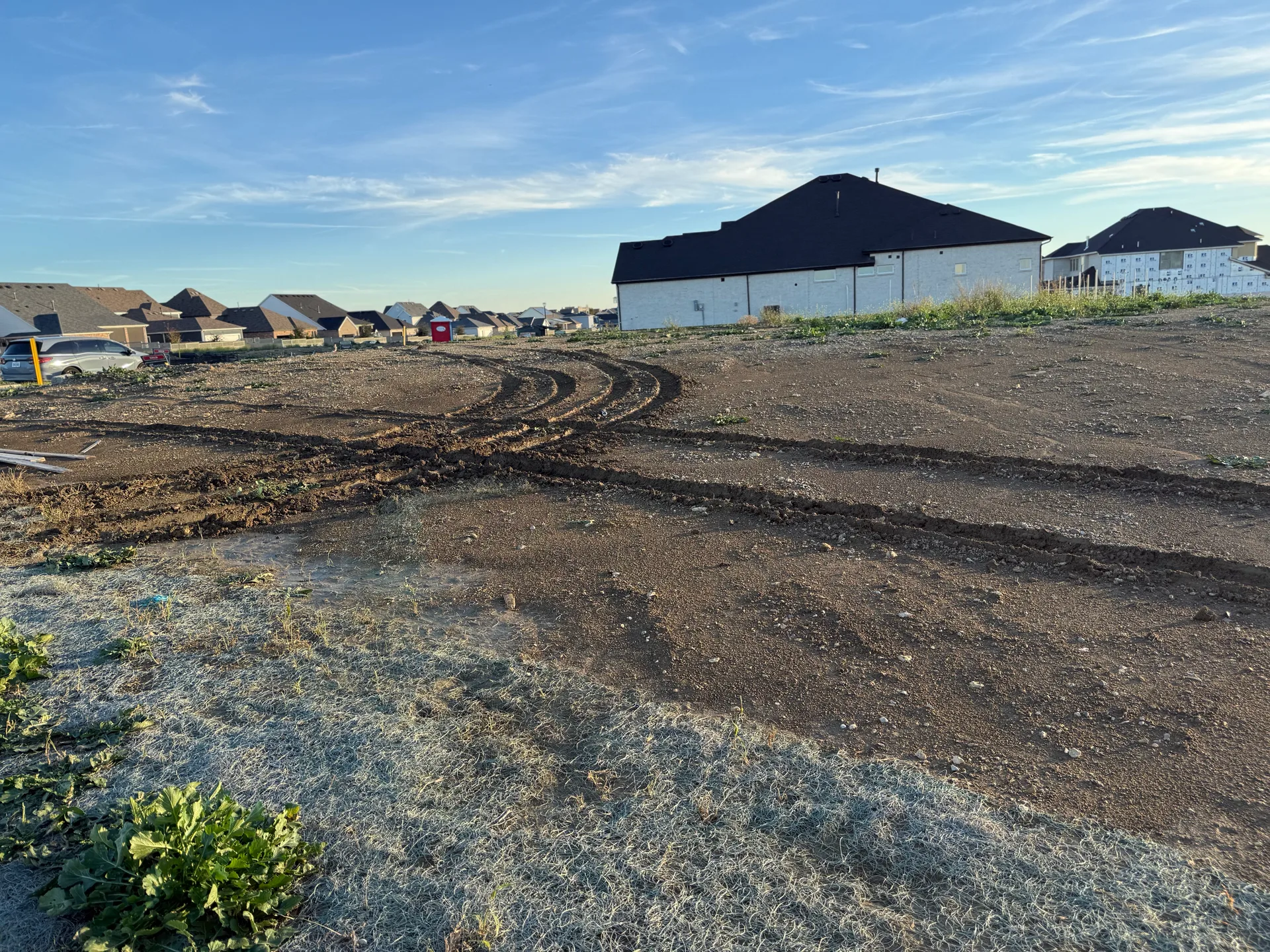
Slope, Grading, and Drainage
How water moves across a lot affects your foundation, your landscaping, and in extreme cases your home. In Denton County, some communities sit on flat, engineered pads while others follow canyon or creek terrain where walkout levels and retaining walls are part of the design. Ask what the grading plan and any retaining walls will look like, and understand that a sloped or rocky lot can add foundation cost in a custom build. Drainage matters at the community level too, so check whether the lot is in or near a FEMA floodplain or a creek corridor before you fall in love with the view. The site's Denton County flood risk buyer guide walks through reading FEMA panels and asking the right questions, and it applies to new construction just as much as resale.
Location Within the Community and Future Build-Out
What surrounds the lot is as important as the lot itself. Greenbelt, pond, and park-adjacent lots usually carry the highest premiums because they protect a view and open space, but confirm exactly what the protected area will stay as, because a "greenbelt" can shift with a future phase or an infrastructure line. At the other end, lots near an arterial road, a future amenity center, a school site, or a retail pad face different noise and traffic than interior lots. The community's master plan is the load-bearing document, so ask to see where future phases, roads, trails, and amenity sites are planned and what the current construction schedule implies about noise and dust while you live through it. The new construction phases guide explains how phases and their timing shape the experience, and the monthly builders and phases roundup tracks what is active across Denton County.
Setbacks, Easements, and Utility Setup by Lot
The buildable area of a lot is smaller than the lot itself. Setbacks (the required distances between the home and the property lines), easements (utility or drainage corridors the developer and utilities can use), and any floodplain line all carve usable space out of the platted lot. The plat and the survey show these lines, and they vary lot by lot, so review them for the specific homesite before you sign rather than assuming the model home's layout will fit identically. Utilities also vary by address: in Denton County, new communities are often served by a municipal utility district or city water and sewer, while acreage and rural areas can involve private well and septic. The buying acreage in Argyle guide covers the rural-side checks, and the new construction contracts guide covers what the contract and closing documents should spell out about the lot.
Address-Level Checks: Flood Risk, Districts, Schools
Two homes five minutes apart can sit in different municipalities, different school campuses, and different special districts, and a homesite's address is what decides all of it. For the exact lot, confirm the school district and assigned campuses with the district (never a ZIP or mailing address), using the boundary tools in the North Texas school districts guide. Confirm the taxing entities and any MUD, PID, or HOA obligations for that specific section and phase, since assessments vary from one section of a community to the next, using the property taxes and ownership costs guide and the HOA, PID, and MUD guide. And confirm whether the lot is inside the incorporated city for the community you think you are buying in, because several corridor developments carry mailing addresses that do not match their municipal or ETJ status.
The financial side of the lot decision also connects to the rest of your budget: the lot premium and its effect on your loan and taxes are part of the same cash picture as your down payment and closing costs, which the site's how much cash you need guide walks through, and upgrade spending is separate from both, covered in the upgrades worth-it guide.
Homesite Selection Checklist
- Orientation. Which way does the back yard face, and when does your family use it? Match the elevation and floor plan to the side of the street.
- Slope and drainage. Ask about the grading plan, retaining walls, and any walkout design; check the floodplain and creek corridors.
- Surroundings. What is across the street and behind the lot today, and what does the master plan say will be there in five years?
- Premium schedule. Get the full lot premium list for the phase and compare lots on total price, not base price.
- Plat, survey, and setbacks. Review the buildable area, easements, and property lines for the exact lot.
- Utilities. City water and sewer, a MUD, or private well and septic? Confirm for the lot, not the community brochure.
- Schools and jurisdictions. Verify the assigned campus, municipality and ETJ status, and special districts for the exact address.
- Community standards. Confirm HOA design standards, landscaping rules, and any architectural review that applies to your elevation and fence.
Frequently Asked Questions
What is a lot premium on a new construction home?
A lot premium is the additional amount a builder charges for a specific lot above the base price of the home, usually for features such as a greenbelt or pond view, a larger yard, a corner or cul-de-sac location, or a wooded setting. Premiums can range from zero to tens of thousands of dollars, and they are part of the financed price.
Which lot orientation is best in North Texas?
There is no single best orientation; it depends on how your family uses the yard and rooms. A back yard on the west gets strong afternoon sun and heat in summer, one on the east gets morning light and cools earlier, and a north or south exposure changes the sun pattern through the seasons. Walk the lot at the time of day you will use it and ask the builder which elevation fits which side of the street.
Is a greenbelt or pond lot worth the premium?
"Worth it" is a lifestyle and resale question, not a formula. Greenbelt and water lots protect a view and open space, tend to carry the highest premiums, and are often the first lots to sell. Verify what the protected area will actually stay as, and compare the total price with the premium included against other lots before you decide.
What should I verify about a homesite before signing?
At minimum: the grading and drainage plan, flood risk for the exact lot, the plat and survey showing setbacks and easements, the utility setup (city versus MUD versus well and septic), the assigned school campuses, the municipality and ETJ status, the special districts and HOA obligations, and the lot premium schedule for the phase.
Do lot premiums apply to every lot?
No. Builders commonly charge premiums only on the most desirable homesites, and some lots carry no premium at all. In a fast-selling phase, buyers may end up paying a premium for the only available lots, so ask for the full premium schedule and compare lots on total price.
Can I finance a lot premium?
Yes. The lot premium is part of the home price, so it is included in the contract price and financed like the rest of the home. That also means it increases the annual tax base, so include it when you compare the total first-year costs of different lots. Confirm the appraised and financed amount with your lender.
Conclusion
A homesite is a long-term decision dressed up as a short-term choice. The floor plan you can change within the builder's options; the lot is fixed the day you reserve it. In Denton County's master-planned communities, the buyers who choose well weigh orientation, slope and drainage, surrounding land and future phases, the plat and utility setup, the premium schedule, and the address-level details (schools, jurisdictions, districts) before they sign, rather than picking the view first and verifying later.
Take the community's master plan, the phase's premium schedule, and the plat for the specific lot to your next sales-office visit, and bring a real estate professional who has worked these communities to help you read them. The new construction hub organizes the community guides, and the spec vs custom build guide explains how the product type affects how a homesite is sold.
Theresa De La Rosa, Broker, REALTOR, Covenant Heritage Realty | In DFW Living Group
Want to talk about buying or selling in this area?
Schedule a ConsultationPrefer to talk it through? Call (940) 240-3800 or send a message.
Sources
- David Weekley Homes, How the Lot Affects Home Price, for how lot characteristics and premiums work in builder pricing. Reviewed October 26, 2026.
- NewHomeSource, What Makes a New-Home Lot Worth a Premium, for the definition and range of lot premiums. Reviewed October 26, 2026.
- Century Communities, What to Consider When Choosing a Lot, for the buyer-side evaluation factors (orientation, topography, location within the community, future development). Reviewed October 26, 2026.
- Site sources reviewed for consistency and internal linking: the Denton County flood risk guide, the new construction phases guide, the builders and phases roundup, the new construction contracts guide, the Argyle acreage guide, the property taxes and ownership costs guide, the HOA/PID/MUD guide, the school districts guide, the spec vs custom build guide, and the new construction hub.
Disclaimer. This article is for general educational purposes and is not an appraisal, valuation, engineering, legal, tax, lending, or school-selection guarantee. Lot premiums, grading and drainage plans, plats, surveys, easements, setbacks, utility arrangements, special districts, HOA standards, builder lineups, prices, and development approvals vary by community, phase, and lot and change over time; verify every item for the exact lotsite with the builder, developer, HOA, municipality, appraisal district, utility provider, school district, and appropriate professional advisers before signing. Nothing in this article is a guarantee of a school outcome, resale value, appreciation, drainage performance, foundation performance, or development approval. Theresa De La Rosa, Broker, License #807294 (TX), Covenant Heritage Realty, LLC. Equal Housing Opportunity.

Theresa De La Rosa is the Founder and Broker of Covenant Heritage Realty, LLC and the Leader of In DFW Living Group. A Texas Real Estate Broker and REALTOR® (License #807294) with 18+ years of real estate experience, she guides new-construction buyers through community, homesite, and contract decisions across Argyle, Justin, Northlake, Flower Mound, Denton, and surrounding Denton County communities. Learn more about Theresa.