
Quick Answer
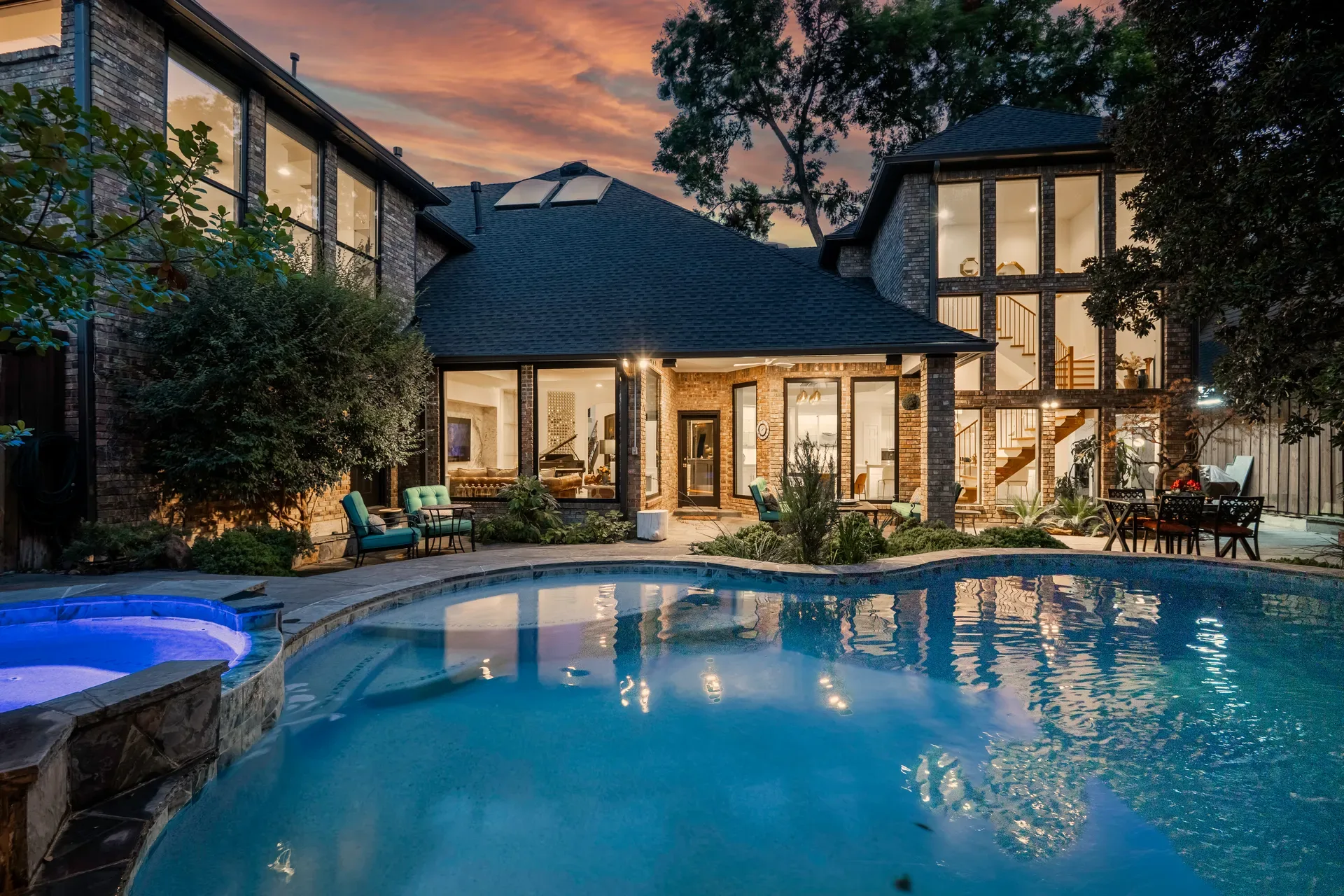
- Lead with twilight pool photography.
- Show the pool, patio and lot together.
- Document equipment age, service and repairs.
- Verify local barrier, HOA and insurance requirements.
- Price from current pool and non-pool comparable sales.
- Never promise a fixed pool premium or return.
Theresa De La Rosa's Broker Perspective
I'm Theresa De La Rosa, Broker of Covenant Heritage Realty in Northlake, and I represent resale sellers across Pecan Square, Harvest, Canyon Falls, The Ridge at Northlake, and surrounding Denton County communities, including owners of pool homes. My advice is consistent: treat the pool as the centerpiece of an outdoor living story, not a footnote in the remarks. The listings that perform best lead with dusk photography, show the pool in motion, document the safety and HOA details, and price from current pool-versus-non-pool sales in the same community. A pool is a feature with real trade-offs, and honest, well-presented marketing is what lets it help rather than hurt a sale.
Why a Pool Home Needs Different Marketing in North Texas
North Texas has a long warm-weather season, but yearly conditions vary. The National Weather Service's 1991–2020 Dallas–Fort Worth climate normals report an average of 20 days per year reaching 100°F, while normal monthly high temperatures exceed 90°F during June, July and August. Those conditions help explain why pools can be meaningful lifestyle features, but they do not establish a guaranteed pool premium. See the National Weather Service Fort Worth 1991–2020 climate normals and the DFW annual normals for the underlying data.
The stakes are also higher because listings compete on photographs first. The photos you upload to the MLS (NTREIS) and the listing portals are the first and often the only impression many buyers form, so the pool needs to look its best in that first pass. Listing information, including photos, measurements, and square footage published through the MLS and portals, should always be verified by buyers through the listing source before relying on it.
Marketing Tactic 1: Professional Photography, Including Twilight and Evening Shots
The single highest-impact photo for a pool home is usually a professionally shot twilight exterior: the pool lit from within, the deck and outdoor living space glowing, the sky still holding color. Pools photograph their best in the last hour of daylight, when the water, lighting, and patio furniture read together as a destination rather than a hole in the yard. A good pool-home photo set should include at least one evening ambiance shot, plus daytime exterior shots, pool-focused angles from the patio, and interior shots that capture the sight line from the great room to the water, because buyers notice whether the pool anchors the view from inside.
Budget for a photographer who shoots twilight specifically. Sunset is brief in Texas, so the shoot needs to be scheduled on a clear evening with the pool equipment and deck prepared in advance. The payoff is a hero image that makes buyers stop, and a stop-worthy hero image is worth more than a dozen ordinary room shots in a thumbnail-driven market.
Marketing Tactic 2: Aerial and Drone Footage
Drone footage shows a pool home the way a car ad shows a car: in context. An aerial pass can show the pool in relation to the backyard, the patio, the lot, and the outdoor living zones, which is exactly the information buyers use to decide whether the outdoor space fits their life. In North Texas master-planned communities, where backyards and lots vary from section to section, drone video is one of the fastest ways to convey the real layout to buyers who cannot visit in person.
Pair the aerial with ground-level footage in the same edit. The strongest pool-home video opens with the home, works inside toward the back doors, then opens up to the pool and yard from above, so a relocating buyer sees both the house and the outdoor story in one pass.
Real-estate photography used to help sell a property is considered nonrecreational drone activity. Use an FAA-compliant operator working under Part 107 and confirm any applicable airspace authorization, operating and safety requirements before the flight, per the FAA guidance for nonrecreational drone pilots. Drone footage cannot always be obtained: availability depends on airspace, weather, safety and property conditions.
Marketing Tactic 3: Video Walkthrough That Emphasizes the Pool
A pool home benefits from video more than most listings. A walkthrough that deliberately sequences the interior toward the pool, then spends real time on the water and the deck, tells the outdoor-lifestyle story that still photos only suggest. Keep the edit concise for the MLS and portals, and let the audio stay clean: buyers want to imagine themselves there, not hear wind noise. If the video is hosted on a platform, embed it on the listing page directly so it plays without a click-through.
Video also solves a real problem for North Texas sellers: relocating buyers. Households moving to Northlake, Argyle, or Justin from out of state often shortlist homes sight unseen, and a video that treats the pool as the centerpiece is one of the few ways they can feel the backyard before they fly in. That ties directly to the out-of-state buyer pool my remote home buying guide describes.
Marketing Tactic 4: 360-Degree Views
A 360-degree tour lets a buyer stand on the pool deck and look around without leaving their couch, which is exactly the tool out-of-state and relocating buyers need. The tour should begin in the backyard so the pool is the first thing a virtual visitor reaches, with nodes at the pool deck, the patio, and the interior glass line so the indoor-outdoor flow is obvious. Many North Texas new-construction communities and resale homes pair a 360 tour with a floor plan, and the combination answers more questions in one visit than any single photograph.
Marketing Tactic 5: Staging Around the Pool
A bare pool deck reads as maintenance; a staged one reads as a lifestyle. Set the scene the way you would stage a living room: clean lounge chairs, a dining set, shade, and tasteful towels show buyers how the space is used on a Saturday in July. The staging should also be honest: keep the deck clear of clutter, make sure the water is clean and balanced for every showing and every shoot, and keep the safety barrier and gate fully functional and visible, because buyers notice both the lifestyle and the safety story.
Marketing Tactic 6: Safety Features and Texas Pool-Fence Rules
Pool safety is a feature, and it belongs in the marketing. There is no single statewide residential-pool rule that should be applied to every North Texas single-family home without checking the property's jurisdiction. Texas Health and Safety Code Chapter 757 contains enclosure standards for the properties and associations covered by that chapter, but private single-family pools may also be governed by municipal ordinances, locally adopted building or pool codes, HOA restrictions and insurer requirements.
Before listing, a seller should:
- Verify the municipality or county that governs the property.
- Check the current building or permitting department requirements.
- Check current HOA governing documents.
- Inspect gates, latches, alarms and barriers before listing.
- Not claim a pool is "code compliant" unless the applicable authority or a qualified professional has verified it.
- Not assume every North Texas city has the same 48-inch requirement.
The full statute is available from the Texas Legislature, Texas Health and Safety Code Chapter 757. Because requirements are property-specific, check the official municipal pages for the city that governs the property. Examples include the City of Denton's swimming pool page, the Town of Northlake's pool construction permit application, and the Town of Flower Mound's pool requirements. These examples apply within their own jurisdictions and do not control properties located in other jurisdictions.
Marketing Tactic 7: HOA Pool Rules
Community associations in North Texas master-planned communities can regulate pools in ways that matter at resale: enclosure and gate requirements, hours of use, noise, and in some communities what pool types are permitted at all. Before listing, pull the current HOA governing documents so the seller packet states the actual rules instead of assumptions, and be ready to share them with buyers, because pool rules are the kind of detail a buyer's attorney or lender will ask about. Rules vary by association and change over time, so verify directly with the specific HOA for the property rather than relying on a neighbor's summary.
Marketing Tactic 8: Maintenance and Utility Expectations
A documented maintenance story builds confidence; a vague one invites doubt. In the listing remarks and the seller packet, owners should document what a new owner inherits: pool type and construction (gunite, fiberglass, or vinyl), the age and condition of the equipment (pump, filter, heater, and any automation), the last service or inspection, water source history, and any transferable warranty. Buyers should verify pool condition with a qualified pool inspector as part of their own due diligence, because a pool's mechanical condition is not something a photo can show.
Be candid about expectations in the remarks, because candor is a seller asset. Maintenance cost and time vary widely by pool size, construction type, equipment age, and whether an owner does the work or hires a service, and utility use rises in a hot summer. An honest note that a pool is a cared-for feature with ongoing upkeep attracts the buyers who want it and lets the buyers who do not self-select out, which is better for everyone than a surprise at the inspection.
Marketing Tactic 9: Insurance Considerations
Sellers with a pool should also be ready for insurance questions from buyers. The Texas Department of Insurance warns that many homeowners policies provide minimal or no pool-specific liability coverage and that property coverage for the pool varies by policy. Sellers and buyers should speak directly with their insurer or agent about liability limits, property coverage, enclosure requirements, diving boards, slides and any need for additional coverage. When you list, have your carrier details and any documentation ready, and remind buyers to confirm their own coverage with their carrier before closing, because pool coverage expectations vary by insurer and policy form.
Does a Pool Return Its Value? The Balanced, Sourced Answer
The evidence says a permanent, well-built pool can add value, but the return is partial and varies by market. NAR's 2023 Remodeling Impact Report: Outdoor Features modeled an 18-by-36-foot in-ground gunite pool with standard filtration and a concrete perimeter surround. The report estimated a national project cost of $90,000, an estimated $50,000 recovered at resale and 56% cost recovery. NAR cautions that project costs vary by geographic region, property and scope. These figures should not be treated as a guaranteed North Texas return or as the amount a particular pool adds to market value.
The honest conclusion is that whether a pool returns its value depends on the market, the neighborhood, the buyer segment, and the pool's condition and construction, none of which a photo can change. There is no honest promise that a pool will return a fixed percentage of its cost or add a set dollar amount to an offer, and any agent who makes that promise is guessing. The appropriate pricing method is a current, property-specific comparative market analysis (CMA) using verified pool and non-pool comparable sales in the same community or competitive market area, and that analysis belongs in the conversation before a price is set, not after.
North Texas Specifics: Season, Heat, and the Resale Buyer Pool
Three North Texas realities shape how a pool home should be marketed. First, the season is favorable: the National Weather Service's 1991–2020 normals for Dallas-Fort Worth show normal monthly high temperatures above 90°F during June, July and August, so a pool is a meaningful lifestyle feature for much of the year rather than a novelty for a few weeks. Second, the buyer pool is heat-driven: households moving to Northlake, Argyle, Justin, Denton, and Flower Mound in the summer months often include buyers who actively want a private pool and buyers prioritizing outdoor living.
Third, the competition is defined by what is for sale nearby. In communities like Pecan Square, Harvest, Canyon Falls, and The Ridge at Northlake, the resale inventory includes both pool and non-pool homes, so a pool home competes against two different products: other pool homes on lifestyle, and non-pool resale and new homes on price. The marketing and the pricing both have to reflect that split, which is one more reason a pool home needs a different plan than a standard listing.
The Honest Trade-Offs
A pool also comes with trade-offs, and pretending otherwise undermines the sale. It costs money and time to maintain: chemicals, cleaning, equipment, utilities, and seasonal care all add up, and the exact figures vary widely by pool size, construction type, equipment age, and whether an owner does the work or hires a service. Some buyers filter pool homes out entirely: buyers concerned about safety or maintenance, households that do not want the upkeep, and relocation buyers who are not sure they want a pool at all, while others prefer additional yard space or less maintenance. A seller should price and present with those filters in mind rather than assume the pool is universally loved, and a buyer's own inspection and service quotes will put real numbers on the trade-off before closing.
The marketing job, then, is precision, not persuasion. Show the pool at its best, document the safety and HOA details, state the maintenance story honestly, and let buyers who want the lifestyle raise their hand. That is how a pool helps a sale: it does not need to convince everyone, it needs to be unmistakably excellent to the buyers who already want one.
What This Means for Sellers
If you are selling a pool home in North Texas, the fundamentals are:
- Build the pool-first marketing package. Twilight photography, drone footage, a video walkthrough that leads with the pool, 360 views, and staged pool deck. This is the single biggest difference between a pool home listing and a standard one.
- Price from pool-versus-non-pool sales. A current, property-specific comparative market analysis comparing pools in the same community, built from verified MLS (NTREIS) data, is the only honest basis for the price. My Selling Guide walks through pricing, preparation, inspections, and offers step by step.
- Document the safety story. Verify the pool-barrier requirements for the specific municipality or county that governs the property, inspect the gate hardware, and document the barrier, alarms, and any inspection records for the seller packet. Do not claim the pool is "code compliant" unless the applicable authority or a qualified professional has verified it.
- Pull the HOA documents. State the actual association rules on enclosures, hours, noise, and pool types in the seller packet instead of leaving buyers to guess.
- Prepare the maintenance, utility, and insurance record. Pool type and equipment age, last service, water source, transferable warranties, and the homeowner's insurance picture, including what buyers should confirm with their own carrier.
- Complete a truthful Texas Seller's Disclosure Notice. Under Texas Property Code 5.008, sellers of most single-family properties must give the buyer a written disclosure, and the standard TREC Seller's Disclosure Notice (Form 55-1) covers the condition of the property and its major systems, so catalog the pool's condition honestly before listing.
What Should a Pool-Home Seller Prepare?
- Pool type and approximate installation date
- Permit records available to the seller
- Equipment age and model information
- Recent service, inspection and repair records
- Transferable warranties, if any
- Heating, automation and water-feature information
- Known defects or prior repairs
- Current HOA documents
- Applicable barrier and gate information
- Insurance questions buyers should discuss with their own carrier
- Truthful completion of the current Texas Seller's Disclosure Notice when legally required
This checklist is a starting point for the seller packet. It does not replace a pool inspection, appraisal, attorney, insurer or municipal authority.
The dedicated sell-my-home guides go deeper into each town's market, including how new construction and builder incentives shape buyer comparisons: Selling a Home in Northlake, Selling a Home in Argyle, Selling a Home in Justin, Selling a Home in Denton, and Selling a Home in Flower Mound.
And be clear-eyed about the outcome. No agent can promise a price, a timeline, a pool premium, or multiple offers. A pool home performs best when it is priced from current pool-versus-non-pool evidence, presented as the outdoor living asset it is, and marketed to the buyer segment that wants it. Everything else is marketing noise.
Frequently Asked Questions
Does a pool add value to a home in North Texas?
It can, but there is no fixed premium. NAR's 2023 Remodeling Impact Report: Outdoor Features modeled an 18-by-36-foot in-ground gunite pool with standard filtration and a concrete perimeter surround, estimating a national project cost of $90,000, about $50,000 recovered at resale and 56% cost recovery. Those figures are a national modeled project estimate, not a North Texas guarantee. The appropriate pricing method is a current property-specific comparative market analysis using verified pool and non-pool comparable sales in the same community or competitive market area.
Should I include twilight photos of my pool in my listing?
Yes. A professionally shot twilight exterior with the pool lit is one of the highest-impact photos a pool home can lead with. Pools read best in evening light, when the water, deck lighting, and outdoor living space photograph together, and that single shot often anchors the listing in the MLS and on the portals.
Do I need a fence around my pool to sell my home in Texas?
It depends on the property's jurisdiction. There is no single statewide residential-pool rule that should be applied to every North Texas single-family home. Texas Health and Safety Code Chapter 757 contains enclosure standards for the properties and associations it covers, but private single-family pools may also be governed by municipal ordinances, locally adopted building or pool codes, HOA restrictions and insurer requirements. Verify the requirements with the municipality or county that governs the property.
Do HOA rules affect selling a pool home?
They can. Associations can regulate pool enclosures, gate hardware, hours of use, noise, and in some communities what pool types are allowed at all. Gather the current HOA governing documents early so you can present the actual rules in the seller packet and answer buyer questions accurately.
Will a pool slow down my sale?
Not necessarily. A pool can widen interest in warm months and in communities where pools are common, and it can narrow it for buyers who prefer additional yard space or less maintenance. Price, condition, and presentation still drive the outcome, which is why a pool home needs marketing built around the pool rather than treated like an ordinary listing.
What insurance questions come up when selling a pool home?
Buyers will ask about liability. The Texas Department of Insurance warns that many homeowners policies provide minimal or no pool-specific liability coverage and that property coverage for the pool varies by policy. Sellers and buyers should speak directly with their insurer or agent about liability limits, property coverage, enclosure requirements, diving boards, slides and any need for additional coverage.
How do you price a pool home in North Texas?
With a current property-specific comparative market analysis (CMA) using verified pool and non-pool comparable sales in the same community or competitive market area. A pool does not produce a fixed premium, so the price comes from what pool homes and comparable non-pool homes actually sold for near the subject property.
Should a seller get a pool inspection before listing?
It can help, but it is not legally required. A pre-listing pool inspection can identify issues and improve the documentation you hand buyers, and it should be decided property by property based on the pool's age, condition and history.
What records should a pool-home seller give buyers?
A seller packet that covers pool type and approximate installation date, permit records available to the seller, equipment age and model information, recent service, inspection and repair records, transferable warranties, heating, automation and water-feature information, known defects or prior repairs, current HOA documents, applicable barrier and gate information, and a truthful completed Texas Seller's Disclosure Notice when legally required.
Does an above-ground pool add the same value as an in-ground pool?
Generally no. In-ground pools are the type residential value research typically models, while above-ground pools tend to be viewed differently by appraisers and buyers. The value of either, if any, depends on the market, the neighborhood and the comparable sales in the specific community.
Can every North Texas home use drone photography?
No. Real-estate photography used to help sell a property is considered nonrecreational drone activity, so it requires an FAA-compliant operator working under Part 107 and any applicable airspace authorization. Availability also depends on airspace, weather, safety and property conditions.
Conclusion
A pool home in North Texas has a real marketing advantage and a real set of obligations. Market it differently: lead with twilight photography, show the water in motion with drone and video, let remote buyers stand on the pool deck with 360 views, stage the patio as a living space, and document the safety-barrier, HOA, maintenance, utility, and insurance details up front. On value, stay honest with yourself and with buyers: the sourced evidence says a permanent in-ground pool can add meaningful value in a warm market, but the return varies by market, neighborhood, buyer segment, pool condition, and construction, and no one can promise a specific figure. Price from current pool-versus-non-pool sales in your community, present the pool as the centerpiece it is, and let the buyers who want the lifestyle find you.
Explore the North Texas Real Estate Answer Center for direct answers and additional local guides, or reach out through the contact page to talk through your specific property.
Theresa De La Rosa, Broker, REALTOR®
Covenant Heritage Realty, LLC | In DFW Living Group
Texas Real Estate Broker, License #807294, with 19+ years of real estate experience, a two-time RateMyAgent Renowned Price Expert and the 2025 RateMyAgent Argyle Agent of the Year. Theresa serves sellers, buyers, and relocating households throughout Argyle, Northlake, Justin, Denton, Flower Mound, Hickory Creek, and the surrounding Denton County communities with strategic, data-driven real estate guidance. Equal Housing Opportunity.
Sources
- National Association of REALTORS®, 2023 Remodeling Impact Report: Outdoor Features: nar.realtor (PDF). Accessed September 25, 2026.
- National Weather Service Fort Worth/Dallas, 1991–2020 Climate Normals and DFW Annual Normals: weather.gov/fwd/1991-2020_normals and weather.gov/fwd/dfwannual. Accessed September 25, 2026.
- Texas Legislature, Texas Health and Safety Code Chapter 757, Pool Yard Enclosures: statutes.capitol.texas.gov. Accessed September 25, 2026.
- Texas Department of Insurance, homeowners insurance and swimming pools: tdi.texas.gov. Accessed September 25, 2026.
- Federal Aviation Administration, Part 107 and nonrecreational drone operations: faa.gov. Accessed September 25, 2026.
- Texas Real Estate Commission, current Seller's Disclosure Notice: trec.texas.gov. Accessed September 25, 2026.
- Official municipal pool and permitting pages used in this article: City of Denton, Town of Northlake, and Town of Flower Mound. Accessed September 25, 2026.
Disclaimer. This article is for general educational purposes and is not appraisal, investment, legal, tax, insurance, or pool-engineering advice, and it is not a promise of resale value, appreciation, offers, timeline, or any return on a pool's cost. Figures from NAR's 2023 Remodeling Impact Report and appraisal and market commentary are estimates that vary by market, property, and time; the amount a pool adds, if anything, depends on the market, neighborhood, buyer segment, pool condition and construction at the time of sale. Texas pool-barrier law, local municipal and building codes, HOA governing documents, insurance policy forms, and MLS data all change and vary by property, so buyers and sellers must verify the current requirements and figures with the applicable city, association, insurer, appraiser, and the listing source (MLS/NTREIS) before relying on them. No school-quality or neighborhood-safety claims are made in this article. Theresa De La Rosa, Broker, License #807294 (TX), Covenant Heritage Realty, LLC. Equal Housing Opportunity.

Theresa De La Rosa is the Founder and Broker of Covenant Heritage Realty, LLC and the Leader of In DFW Living Group. A Texas Real Estate Broker and REALTOR® (License #807294) with 19+ years of real estate experience, she is a two-time RateMyAgent Renowned Price Expert and the 2025 RateMyAgent Argyle Agent of the Year. She serves sellers, buyers, new-construction clients, relocating households, and military and veteran clients throughout Argyle, Northlake, Justin, and surrounding Denton County communities, with a particular focus on helping sellers position their homes competitively to protect equity and attract strong offers.
In This Guide
- Why a Pool Home Needs Different Marketing
- Professional Photography, Including Twilight Shots
- Aerial and Drone Footage
- Video Walkthrough That Leads With the Pool
- 360-Degree Views
- Staging Around the Pool
- Safety Features and Texas Pool-Fence Rules
- HOA Pool Rules
- Maintenance and Utility Expectations
- Insurance Considerations
- Does a Pool Return Its Value?
- North Texas: Season, Heat, and the Buyer Pool
- The Honest Trade-Offs
- What This Means for Sellers
- Frequently Asked Questions
- Sources