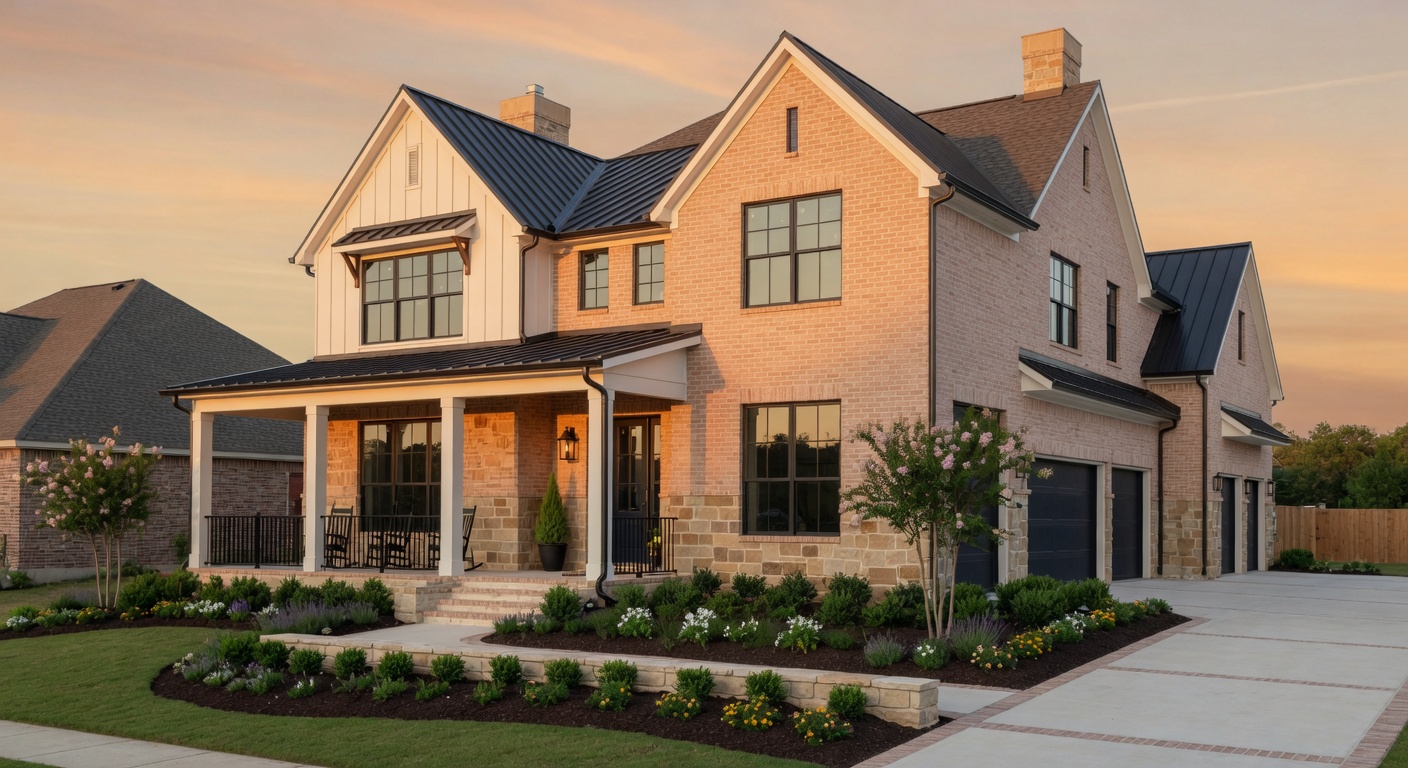
Buying a new-construction home in North Texas involves more than choosing a floor plan and visiting a model home. Buyers must evaluate the builder, contract, homesite, base price, upgrades, incentives, financing, taxes, inspections, construction timeline, warranties, community plans, and competing resale inventory. I'm Theresa De La Rosa, Texas Real Estate Broker and REALTOR® with Covenant Heritage Realty. I help buyers evaluate new construction throughout Northlake, Argyle, Justin, Denton County, and surrounding North Texas communities. My experience is personal as well as professional: before building my own home, I compared Pecan Square, Harvest, and Canyon Falls and ultimately chose Pecan Square. Going through the construction process myself gave me firsthand insight into builder selection, homesites, upgrades, walkthroughs, inspections, timelines, and the decisions buyers encounter between contract and closing. That personal choice reflects my own priorities and research. It does not mean Pecan Square is the right community for every buyer; the appropriate choice depends on your stated housing priorities, budget, location requirements, ownership costs, and timeline.
On This Page
- 1. The Appeal of New Construction
- 2. Who Represents Whom?
- 3. Understanding Builder Contracts
- 4. Understanding the Advertised Price
- 5. Making Smart Upgrade Decisions
- 6. Choosing the Homesite
- 7. Navigating the Build Process
- 8. Independent Inspections
- 9. Financing and Builder Incentives
- 10. Taxes and Ownership Costs
- 11. Builder Warranties and the Claims Process
- 12. Appraisal and Resale Considerations
- 13. Frequently Asked Questions
Quick Answers Before You Start
Do I need my own real estate broker when buying from a builder?
In Texas, you may hire your own broker to represent you, or you may proceed without buyer representation. The builder's sales team represents the builder, not you. If you want an independent broker involved, establish written representation before your first visit and before relying on transaction advice.
Who does the builder's sales representative represent?
The builder. The sales representative at the model home markets the builder's communities and homes, and they are not automatically your representative.
Are builder contracts negotiable?
Many builders use their own contract forms, and the terms differ from resale contracts. Some business terms are negotiable and some are not, depending on the builder, the home, and the market. Read the complete contract and every exhibit before signing.
Are builder deposits refundable?
Deposits are defined by the contract. Some are refundable, in full or in part, within stated deadlines, and others are not. Confirm the deposit terms in writing before you pay.
Should a new home be independently inspected?
Buyers should consider hiring a qualified, properly licensed independent inspector, subject to the builder contract and site-access rules. Possible stages include pre-pour foundation, pre-drywall, and final inspections.
Are builder incentives always a good deal?
No. Incentives can change with rates, prices, and contract deadlines, and a large incentive does not automatically make a home a good value. Compare the complete Loan Estimate, all financing costs, and the total contract price.
What costs may be excluded from a builder's base price?
Lot and elevation premiums, structural options, design-center selections, appliances, window coverings, landscaping beyond the builder package, closing costs, loan discount points, HOA assessments, and property taxes or special-district assessments.
Can school zones and tax rates vary within one community?
Yes. School attendance zones and tax jurisdictions such as MUDs, PIDs, and municipal boundaries can vary by homesite and phase. Verify the specific address with the school district and taxing authorities.
Did Theresa personally build a new-construction home?
Yes. Theresa compared Pecan Square, Harvest, and Canyon Falls before choosing to build her own home in Pecan Square. That firsthand experience complements her professional work as a Texas real estate broker with practical experience in new-construction transactions. Her personal choice does not mean Pecan Square is the right community for every buyer.
The Appeal of New Construction
Depending on the builder, community, construction stage, and buyer's contract, potential benefits may include: newer systems and materials; current floor plans and energy-efficiency features; available structural or design selections; builder-provided limited warranties; lower immediate maintenance needs; new or planned community amenities; quick move-in inventory; and builder financing or closing-cost incentives. These features are not universal. Resale homes may offer similar features, completed neighborhoods, mature landscaping, established tax history, known commute patterns, or a lower total ownership cost.
The more useful comparison is between two specific homes at two specific prices, including taxes, insurance, HOA assessments, utilities, and maintenance. Start with the New Construction Hub to see the communities I cover, then compare any candidate new home against current resale inventory before you decide.
Who Represents Whom?
The builder's onsite sales representative represents the builder. That salesperson is not automatically the buyer's representative. Buyers should understand that the onsite sales representative works for the builder and should not assume that conversations with the representative are confidential. In Texas, buyers should understand the Information About Brokerage Services notice, which explains your agency and non-agency options. Effective January 1, 2026, Texas buyer-representation requirements changed: a license holder generally must enter into a signed written buyer representation agreement before performing brokerage services for a residential buyer, including before showing a property or preparing or submitting an offer. When a license holder shows a property without representing the buyer, Texas law treats it as a non-representation showing: the license holder provides no opinions or advice about the property and performs no other brokerage services for the buyer. TREC does not use a written non-representation agreement for this scenario.
A buyer-representation agreement is a legal contract between you and the broker. It defines the services provided, the term, whether the relationship is exclusive, and compensation terms. Brokerage fees are negotiable and not set by law. Establish representation before relying on transaction advice, and ask each builder whether they require your broker to accompany or register you during the first visit. Many builders apply their own registration deadlines, and an unregistered broker may not be recognized later.
Buyer representation is a choice about advocacy and process. It does not by itself guarantee a lower price, a larger incentive, or any particular result, and I will not promise one.
Understanding Builder Contracts
Many builders use their own contracts rather than a standard resale contract. Terms vary significantly, and buyers should read the complete contract and all exhibits before signing. Areas that deserve particular attention include:
- Deposits: amount, what they are applied to, and whether they are refundable and on what schedule.
- Financing and appraisal provisions: what happens if you cannot obtain financing or if the home appraises below the contract price.
- Construction and closing deadlines: stated dates, estimated dates, and what happens if either side misses them.
- Builder extension rights: how many days the builder may extend and what triggers an extension.
- Price-change or escalation provisions: whether the price can change and under what conditions.
- Change orders and design-center deadlines: deadlines for selections and how changes affect price and schedule.
- Inspection and site-access rights: what inspections you may arrange and when you may visit the home.
- Material substitutions: when the builder may substitute materials and how you are notified.
- Builder default and buyer default: remedies, damages, and termination rights for each side.
- Warranty documents: what is covered, for how long, and how claims are filed.
- HOA and community documents: restrictions, assessments, and obligations you will inherit.
- Dispute-resolution provisions: mediation, arbitration, or litigation requirements.
As a real estate broker, I can explain the transaction process, identify business terms that deserve attention, track deadlines, and help clients formulate questions. I do not provide legal advice. Buyers with questions about contractual rights, enforceability, remedies, or legal consequences should consult a qualified Texas real estate attorney before signing.
Understanding the Advertised Price
A builder's base price may exclude: lot premiums; elevation premiums; structural options; design-center selections; appliances or window coverings; landscaping beyond the builder package; closing costs; loan discount points; HOA assessments; and property taxes and special-district assessments. That means the advertised starting price and the final contract price can differ by a wide margin.
Ask the builder for a written total-price worksheet that itemizes the base price, homesite premium, elevation, selected options, fees, and any incentives or credits associated with the specific home you are considering. For a detailed look at the costs buyers often underestimate, see my article on the true cost of new construction in Denton County.
Making Smart Upgrade Decisions
No upgrade guarantees a dollar-for-dollar return. The usefulness and potential resale contribution of an upgrade depend on the property, community, buyer demand, price point, competing inventory, and market conditions. It helps to organize upgrades into four groups:
- Structural changes that may be difficult to add later: extra bedrooms, expanded garages, extended living spaces, and layout changes that affect framing and foundation.
- Functional changes affecting everyday use: kitchen layout, storage, wiring, plumbing locations, and systems such as lighting or technology.
- Cosmetic selections that may be easier to change: paint, hardware, lighting fixtures, and some flooring or countertop finishes.
- Builder upgrades to compare with post-closing contractor costs: for some items, a qualified contractor after closing may cost the same or less, including when financing is involved.
I help clients compare upgrade cost, function, local resale expectations, and alternatives, without guaranteeing a specific return on investment. For a deeper look at which selections tend to matter most in Denton County, see my new-construction upgrades guide.
Choosing the Homesite
The homesite can affect your everyday life as much as the floor plan. Evaluate: lot orientation and afternoon sun; grading and drainage; easements and utility boxes; retaining walls; road, amenity, and school noise; adjoining land and future phases; proposed commercial or multifamily development; floodplain information; lot premiums; and future construction traffic in nearby phases. Views, open land, and future plans can change unless they are protected by recorded documents such as easements, covenants, or plat restrictions.
Property and community characteristics should also be compared. I have published detailed guides to The Ridge at Northlake, Treeline, Furst Ranch, Wildflower Ranch, and Landmark by Hillwood, and I am happy to walk you through how each compares on location, amenities, and long-term considerations.
Navigating the Build Process
Subject to builder rules and the contract, I help clients monitor reported milestones, organize communications, attend permitted walkthroughs, document questions, track agreed selections, and coordinate with inspectors, lenders, title professionals, and the builder. A real estate broker is not a construction inspector, engineer, code official, or warranty provider. Builders can restrict site access, so every visit must follow the builder's rules.
Each builder's process varies, but buyers typically encounter these stages: contract and deposit; financing or preapproval; homesite and structural selections; design selections; permitting and construction start; foundation; framing and mechanical rough-ins; pre-drywall walkthrough or inspection; interior completion; final inspection; builder orientation; final walkthrough; closing; and post-closing warranty follow-up. Request the builder's anticipated schedule in writing and track dates yourself rather than assuming a promised completion date. For a detailed breakdown of each phase, see my guide to understanding new-construction phases.
Independent Inspections
Buyers should consider hiring a qualified, properly licensed independent inspector. Possible inspection stages may include: a foundation or pre-pour inspection; a pre-drywall inspection; a final inspection before closing; and an inspection before applicable warranty deadlines. All inspections and site access are subject to the builder contract and builder rules. An inspection does not guarantee a defect-free home; it is a limited visual survey of accessible systems and components. The Texas Real Estate Commission publishes consumer guidance on property inspections that explains what a licensed inspection covers.
Financing and Builder Incentives
Builder incentives may require the use of an affiliated lender or title company, so buyers should compare the interest rate, APR, loan type, points, lender fees, cash required, monthly payment, and total financing cost. Determine whether a rate buydown is temporary or permanent and who pays the points. Incentives and prices can change without notice, and a large incentive does not automatically establish that the home is a good value.
Compare the complete Loan Estimate from any lender you consider. Buyers may compare Loan Estimates from other qualified lenders. Using a different lender may change or eliminate builder incentives, so buyers should obtain the written incentive terms before choosing financing. Confirm in writing whether outside financing changes the price, incentives, or contract terms. For a full breakdown of common offers and their conditions, see my builder incentives guide.
Taxes and Ownership Costs
Before signing, verify: municipal jurisdiction; school district; county taxes; PID, MUD, or other special-district assessments; HOA dues; homeowners insurance; utility costs; landscaping; and maintenance expenses. Tax estimates based on unimproved land can understate the real bill after a new home is built, and these costs vary by homesite, phase, and jurisdiction. Confirm the specific address with the school district, taxing authorities, and HOA, and review the Buying Guide for the full list of questions to ask before you commit.
Builder Warranties and the Claims Process
Builder warranties vary. Buyers should obtain and read the actual warranty documents, including exclusions, claim procedures, deadlines, maintenance requirements, and any third-party warranty information. A warranty does not replace inspections, careful documentation, or timely reporting of concerns. Ask where to file a claim, how repairs are scheduled, and what happens if the issue appears after the warranty period begins to run.
Appraisal and Resale Considerations
An appraisal may not support every upgrade, lot premium, or contract price, and financing and appraisal provisions depend on the builder contract and the lender. If the home appraises below the contract price, possible paths include negotiating a lower price, providing additional funds, adjusting the loan, or terminating if the contract preserves that right. Ask how the builder's contract handles that scenario before signing.
Keep resale in perspective: a recent new-construction purchase may later compete with builder inventory, financing incentives, new phases, and resale listings in the same community. No community, builder, homesite, or improvement guarantees appreciation; future value depends on market conditions, interest rates, taxes, and the home itself.
Frequently Asked Questions
When should I involve a real estate broker?
Before your first visit to a model home or sales center, if you want representation. Many builders require a buyer's broker to be registered or to accompany the buyer on the first visit to be recognized. Confirm each builder's policy in advance, and establish representation in a written agreement.
Can I use my own lender?
In most cases buyers may choose their own qualified lender, but some builders condition incentives or contracts on using an affiliated or preferred lender or title company. Compare Loan Estimates and confirm in writing whether outside financing changes the price, incentives, or contract terms.
What is a quick move-in home?
A quick move-in home is a home the builder has completed or is completing on spec, often in a current phase, with a shorter wait than a build-to-order home. Selections are typically limited to what the builder chose. Confirm what is included, the condition and age of the home, and any incentives attached to it.
How long does new-home construction take?
There is no universal timeline. Duration depends on the builder, floor plan, community, weather, permitting, materials, and the contract. A stated completion date is not necessarily guaranteed. Ask for a written anticipated schedule and read the deadline and extension provisions of the contract.
Can a builder substitute materials?
Many builder contracts give the builder rights to substitute materials or finishes that are discontinued or unavailable. The written contract and its exhibits define what can change and how you are notified. Ask about substitution provisions before signing.
Can the closing date change?
Yes, in most cases. Builders typically reserve extension rights, and closing depends on construction progress, inspections, appraisal, lender and title requirements, and the contract. A date in the contract may be an estimate rather than a guaranteed deadline. Ask how delays are handled.
What happens if the home appraises below the contract price?
Outcomes depend on the contract, the lender, and the facts. Possible paths include negotiating a lower price, the buyer bringing additional funds, a renegotiated loan, or termination if the contract preserves that right. Ask how the builder's contract and the loan program handle low appraisals before signing.
Which construction inspections should I consider?
Depending on the builder, contract, and construction stage, buyers may consider a foundation or pre-pour inspection, a pre-drywall inspection, and a final inspection before closing, plus an inspection before any applicable warranty deadline. All inspections are subject to the builder's rules. Hire a qualified, properly licensed independent inspector.
What should I bring to the final walkthrough?
Bring the contract and selection documents, your notes and photographs from earlier walkthroughs, the punch-list and orientation items the builder asked you to track, and a copy of the warranty documents. Verify that agreed items are complete and document any unfinished items in writing with the builder.
What happens after closing if I discover a problem?
The warranty documents and builder procedures define how issues are reported and handled, including deadlines and exclusions. Report concerns in writing within the builder's stated timelines and keep records. Depending on the issue, you may also consult an attorney or another qualified professional.
The Bottom Line
Buying new construction is a process of verification: verify the builder, the contract, the price breakdown, the homesite, the schedule, the inspections, the financing, the taxes, and the warranty before you sign and again before you close. Buyers can make more informed decisions by comparing written terms, current property information, total ownership costs, and professional inspections rather than relying on advertised headlines.
Whether you are comparing builder contracts, negotiating upgrades, choosing a homesite, or deciding between new construction and resale, I help clients organize the numbers and move forward with a clear strategy. For an overview of the communities, builders, and buyer-representation process across North Texas, start with the New Construction Guide, then come back here for the contract-by-contract details. See the Relocation Guide if you are moving to North Texas from out of state, or reach out through my contact page.
Want to talk about buying or selling in this area? Schedule a Consultation.
Theresa De La Rosa
Broker, REALTOR® · Covenant Heritage Realty, LLC | In DFW Living Group
Texas License #807294
Educational notice: This article is provided for general informational and educational purposes only and does not constitute legal, lending, tax, engineering, construction, or inspection advice. Builder contracts, lender requirements, access rules, construction processes, taxes, and warranty terms vary and can change without notice. Verify all information in writing with the builder, lender, title company, HOA, school district, taxing authorities, inspector, and appropriate professional advisers before making decisions.